
How do estranged parents respond to the pain and ache of “no contact”?
How far away from your beloved stranger do you feel?
You and I shouldn’t rush to an answer to this question. The pain of distance is real. Pain, when hidden, is often crammed into a closet like a decade’s worth of out-of-style clothing, sports equipment, and holiday decorations that will explode forth and crush us if we turn the doorknob even a quarter. If the pain is visible, it is like an open sore, and no matter how much we perform wound care, it still seeps and aches.
Some days, we feel a continent away from our beloved strangers.
How far away from God do you feel?
In the same way, we should take a beat before we answer. This pain wears many costumes. Which of these sounds familiar? Abandoned. Left for dead. Punished. Forgotten. Cast aside. In this pain of distance, our hearts can even turn to unbelief. We may dress up our lives in faith, but at our core, we don’t—or can’t—believe right now.
Some days, we feel galaxies apart from God.
In this moment, we can do little to change our distance from our children. Even if we tried, despite what some internet-crowned experts tout, our efforts would probably drive them further away.
However, in this moment, we can speak to our hearts and reject the second question altogether. God is close. So close, in fact, He can reach out and touch our faces.
In 1 Samuel 20–21, David had been anointed King but hadn’t ascended to the throne. He is serving in Saul’s court, but Saul is angry, suspicious, and plotting against him. David’s deep friendship with Jonathan saves his life. David escapes, faces hunger, then runs right into his old nemeses, the Philistines. To get away, he has to act like a sweaty-toothed madman drooling all over his beard. (Much like how we feel when some people look at us and wonder what caused the rift between us and our children.)
At some point after this incident, perhaps even in the cave of Adullam, David felt he had enough perspective to pull out his lyre and spin a tune: Psalm 56. He starts out recounting how his enemies attacked him, injured him, and stirred up strife. He takes a deep breath and then writes these words:
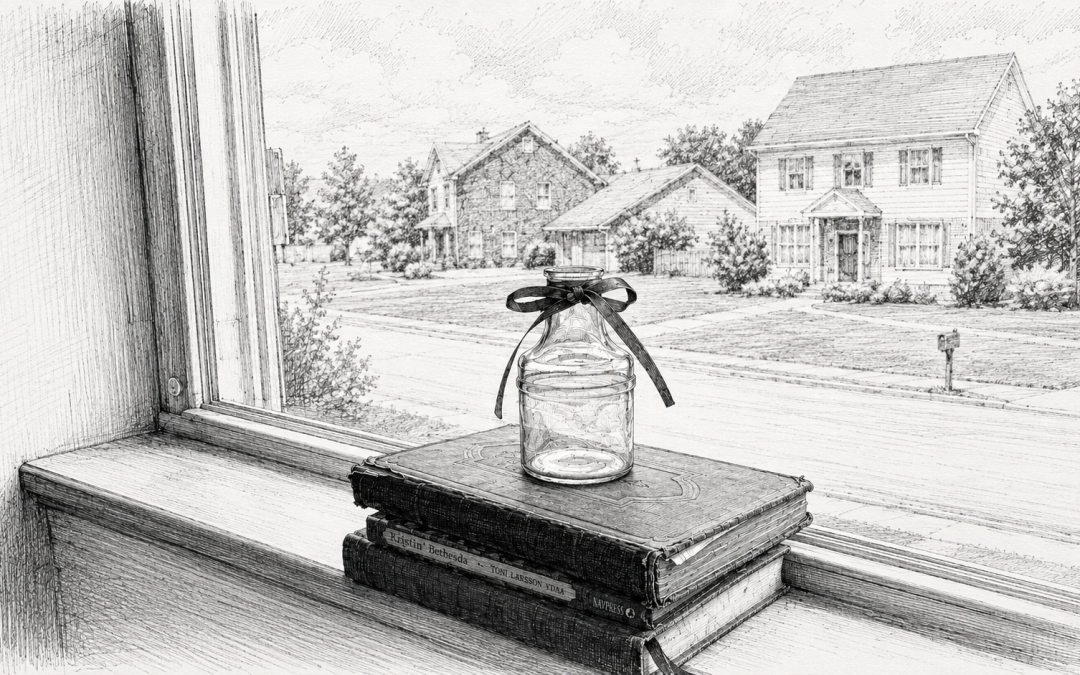
You have kept count of my tossings; put my tears in your bottle. Are they not in your book?
Psalm 56:8, ESV
We are the generation of camcorders, scrapbooking, and shoeboxes full of memories. We need only walk a few steps to pull photo albums from the bookcase, or a few steps farther to lower a box from a closet shelf. We can also pick up our magical rectangles, tap a few times, and see our beloved stranger’s life glow before our eyes. We remember. We ache. In essence, we keep count.
But oh so much more does God. How much more precious is what God does with us? How much more intimate is His collection? Not a tear has pooled in our eyes, carved caverns down our faces, been wiped away, fallen to our clothes, or absorbed by our pillows that He hasn’t captured. And not only the tears, but the stories behind them. The tears are in a bottle, but the reasons we cried are written in His book.
Not a tear has pooled in our eyes, carved caverns down our faces, been wiped away, fallen to our clothes, or absorbed by our pillows that He hasn’t captured.
Yes, we are closer to our memories than we are to our beloved strangers, but God is not distant. He has not forgotten us. He wraps us in His arms. He remembers every moment of grief.
May we, like David reflecting on the tenderness of God, say, “In God I trust; I shall not be afraid. What can man do to me?” Even as we long for the opportunity to make new memories, take new pictures, capture new video, and continue the story, may our voices echo David’s closing words, “For you have delivered my soul from death, yes, my feet from falling, that I may walk before God in the light of life.”
Stay for a While
- Read: 1 Samuel 20:1–22:5 and Psalm 56.
- Pray: Reflect on the last time you cried (or emoted strongly in other ways) about your beloved stranger. Thank God for caring about each moment, each tear, and each feeling.
- Write: Craft your own psalm. Write to the Lord how you feel you have been treated by your beloved stranger, but after each phrase, add David’s Psalm 56 refrain, “In God I trust; I shall not be afraid. What can flesh do to me?”
- Listen: “I Cry” by Russ Taff